
EYCKJ
·
Person
·
Né en 1390, décédé en 1441

AGOACO00854
·
Person
·
1881-1969
Frederick Horsman Varley, painter, was born in Sheffield, England in 1881. He studied at the Sheffield School of Art 1892–1900, and at the Koninklijk Akademie voor Shone Kunsten (Académie royale des beaux-arts) in Antwerp for the following two years. After working as an illustrator and art teacher in England, he immigrated to Canada and obtained work as a commercial illustrator in Toronto in 1912, the same year he first exhibited his art work at the Canadian National Exhibition. In 1914, Varley joined Tom Thomson, A.Y. Jackson and Arthur Lismer on sketching trip to Algonquin Park in Ontario. Some of his most famous works resulted from his association with these artists. He participated in the War Art program after the war in 1918 and was a founding member of the Group of Seven in 1920. Although he painted numerous landscapes, his interest lay more in portraiture, which he pursued during the 1920s. Varley moved to Vancouver in 1926 to teach at the School of Decorative and Applied Arts. His landscapes from this period are marked by fine draftsmanship, exotic colour and unusual vantage points. In 1933 he and J.W.G. Macdonald opened their own school, the British Columbia College of Arts, which closed in 1935. Varley lived subsequently in Ottawa and Montreal, returning in 1944 to Toronto. The Art Gallery of Ontario held a retrospective of his work in 1954. He died in Toronto in 1969. Varley was a member of the Arts and Letters Club, Toronto. His work is in numerous Canadian public collections.
AGOAC04376
·
Person
·
1876 - 1922
Anna Belle Wing Kindlund (later Mrs. Alois Trnka), 1876-1922, was an artist born in Buffalo, New York. She studied with W. Hitchcock in Buffalo, and G. Bridgman in New York. She was a member of the Buffalo Society of Artists and the New York Society of Craftsmen, and is listed in Who Was Who in American Art as a painter and miniaturist.
AGOAC00689
·
Person
·
1941 -
John Bernard Boyle (1941- ) is an artist, activist, curator and writer who has lived and worked in St. Catharines, London, Elsinore, and Peterborough, Ontario. He married Janet Perlman, with whom he has one daughter, Emily. Boyle was educated at London Teachers’ College and the University of Western Ontario, and is self-taught as a painter. He taught elementary school in St. Catharines intermittently between 1962 and 1968. In 1974 he moved with his family to a converted church in Elsinore, Ontario (near Owen Sound), where he had his studio until 2002. He is currently based in Peterborough. Boyle began to exhibit his paintings in 1964, the same year he was inspired by meeting London artists including Jack Chambers and Greg Curnoe. In 1966 controversy arose at the London Public Library and Art Museum over Boyle’s exhibited piece Seated Nude. Boyle was an early participant in London’s 20/20 Gallery. In 1972 he designed sets for the play Buffalo Jump at Theatre Passe Muraille, Toronto; that same year he curated the first Billboard Show in St. Catharines. In 1980 Boyle completed the mural Our Knell for Queen Subway Station, Toronto. From 1973 through the 1990s, Boyle exhibited regularly at Nancy Poole’s Studio, Toronto. A key figure among the artist activists who established professional representation and rights for artists in the early 1970s, Boyle was the founding spokesperson of Canadian Artists Representation Ontario (CARO) in 1971. In 1970 he served as the first president of the Niagara Artists Co-operative (later Company). Boyle was a member of the Board of Trustees of the Art Gallery of Ontario, 1975-1977. Boyle has written extensively in journals including 20 Cents Magazine, Parachute, and Twelve Mile Creek. His regular column “According to Boyle” in CAROT (1975-78) dealt with challenges facing artists. Boyle has written three novels, No Angel Came (1995); and the unpublished The Gergovnians and The Peregrinations and Permutations of a Young Artist in Canada. His illustration and book design work includes The Port Dalhousie Stories by Dennis Tourbin (1987), as well as several magazine articles and book jackets. He initiated the discipline of “Canadology” in 1989 to record the social customs of the country. Boyle is a founding member (since 1965) and principal kazooist of The Nihilist Spasm Band. His work is represented in numerous Canadian collections, including the National Gallery, the Art Gallery of Ontario and the Montreal Museum of Fine Arts.
AGOAC00562
·
Person
·
1929 -
Michael James Aleck Snow (1929- ) is a Canadian painter, sculptor, filmmaker, photographer and musician. He was born in Toronto and educated at Upper Canada College and subsequently at the Ontario College of Art (1948-1952). After travels in Europe (1953-54) he worked for Graphic Films in Toronto (1955-56), producing his first independent film, A-Z. His first solo exhibition as a painter was at the Greenwich Gallery in Toronto in 1956. Between 1961 and 1967, mostly while living in New York, Snow produced work in the Pop-art mode based on the silhouette of a young woman, entitled Walking Woman, probably his most widely recognized creation. A series of 11 stainless steel sculptures of the image was created for the Ontario pavilion at Expo 67 and is now in the collection of the Art Gallery of Ontario. After moving to New York in 1964, he made films regarded as Minimalist, such as New York Ear and Eye Control (1964) and Wavelength (1966-67). Returning to Toronto in 1972, Snow worked mainly on cinematic and photographic projects including ‘Rameau’s Nephew’ by Diderot (Thanx to Dennis Young) by Wilma Schoen. His work is concerned with the nature of media themselves, with perception and with the interrelation of language, sound and meaning. Snow has been the subject of exhibitions and retrospectives in Toronto, Vancouver and Paris.
AGOAC00487
·
Person
·
1869 - 1959
Frederick Sproston Challener, painter, was born in Whetstone, England in 1869 and came to Canada in 1870. He studied at the Ontario School of Art, was first exhibited in 1900 at the Royal Canadian Academy and subsequently worked as a newspaper artist. After a tour of Europe and the Middle East in 1898-99, he began working as a muralist and participated in the decoration of the recently completed Toronto City Hall. At the end of the First World War, Challener worked as a painter for the Canadian War Records Department. He made his career chiefly by creating murals for passenger boats, restaurants, hotels—such as Fort Rouillé in the King Edward Hotel,Toronto—office buildings and theatres, including the Royal Alexandra Theatre in Toronto. He also produced easel paintings, watercolours and drawings in a realistic, romantic style. From 1927-1952 he taught at the Ontario College of Art, during which period he made notes and assembled material on Canadian artists. He died in Toronto in 1959. Challener was a member of numerous arts organizations including the Toronto Art Students’ League, Ontario Society of Artists, Royal Canadian Academy, Society of Mural Decorators of Toronto and the Arts and Letters Club of Toronto (founding member, 1908). His work is in the National Gallery of Canada, the Civic Art Gallery, Winnipeg, the Art Gallery of Ontario and numerous public buildings.
AGOAC00461
·
Person
·
1921-1988
Gershon Iskowitz (1921-1988) was an abstract painter based in Toronto for much of his artistic career. Born in Kielce, Poland, he survived internment in Nazi concentration camps and lost his entire family in the Holocaust. Iskowitz studied art in Munich at the Akademie der Bildenden Künste in 1947, soon transferring to private studies with Oskar Kokoschka. He moved to Toronto in 1949. His work developed from wartime imagery to a focus on landscapes (particularly inspired by practice in the Parry Sound area), eventually arriving at his mature abstract expressionist style in 1967. Iskowitz began exhibiting with Gallery Moos in 1964, a relationship which continued throughout his career. He taught at the New School (Toronto) from 1967-1970, and his informal mentoring of artists in Toronto is often noted. Iskowitz, along with Walter Redinger, represented Canada at the Venice Biennale in 1972. The artist established the Gershon Iskowitz Foundation in 1985, with the mandate of awarding the Gershon Iskowitz Prize to a mature practising artist; since 2007 the Foundation has partnered with the Art Gallery of Ontario to administer the Gershon Iskowitz Prize at the AGO.
AGOAC00431
·
Person
·
1936-1990
Robert Nelson Markle, Canadian artist, writer, educator and musician, was born in Hamilton, Ontario in 1936 and died in Holstein, Ontario in 1990. He began his studies at the Ontario College of Art (OCA) in 1954, but was expelled before graduation. While at OCA, he met Marlene Shuster, a fellow student, whom he married in 1958. The focus of Markle’s work from his early days was the female nude, particularly burlesque dancers, and Marlene became his primary model and muse. In 1962 Markle had his first group exhibition at The Isaacs Gallery in Toronto, becoming one of the “Isaacs Group” of artists. In 1965, Markle paintings shown in the exhibition Eros ’65 at the Dorothy Cameron Gallery were seized on a charge of obscenity, drawing considerable media attention. In the mid-1960s Markle began to write for magazines such as the Toronto Telegram Showcase, Maclean’s, and Toronto Life, publishing widely on topics as diverse as striptease, hockey, childhood Christmases, and Gordon Lightfoot. Markle also worked extensively as an illustrator, contributing images to magazines and literary journals. His work as an educator included terms at The New School of Art (1966-1977) and Arts’ Sake (1977-1982) as well as OCA and the University of Guelph. From the early 1960s, Markle played tenor saxophone and piano in the Artists’ Jazz Band. In 1970 the Markles moved to a farmhouse outside of Holstein, Ontario, although Robert re-established a studio in Toronto from 1979 to 1982. In 1979, he won a commission to decorate a Toronto hamburger restaurant, which was named Markleangelo’s in his honour. His other large-scale commissions include wall-sculptures for the Ellen Fairclough Building in Hamilton, Ontario, and the Metro Toronto Convention Centre. He executed painted outdoor murals in Owen Sound and Mount Forest, Ontario. Markle was killed in a traffic accident in 1990. Of Mohawk ancestry, Markle used his mother’s spelling of his surname, although it was spelled “Maracle” on his birth certificate. Markle worked primarily in painting and ink drawing, and also explored photography, collage, printmaking, wooden sculpture and neon. He collected folk art, which inspired a number of whirligig works later in his career. His work is in numerous public and private collections, including the Art Gallery of Ontario and the National Gallery of Canada.
AGOAC0043
·
Person
·
1909-2003
Florence Vale, Canadian artist, was born on April 18, 1909 in llford, Essex, England and died on July 23, 2003 in Toronto, Ontario, Canada. Her family immigrated to Toronto two years after her birth, where she grew up with an interest in music. She married artist Albert Franck on June 8, 1929, and together they bought a house on Hazelton Avenue in Toronto which became a centre for artists, writers, musicians, and critics. Florence Vale was the mother of two children, Trudy (who died as an infant) and Anneke.
Florence Vale began to paint with her husband’s paints and brushes in the late 1940’s with no previous artistic training – only what she had learned under the influence of her husband and the artists who visited her home. Her art was influenced by Surrealism, Cubism, Expressionism, and the works of Paul Klee. After her husband’s death in 1973, Florence Vale continued to express her artistic ability with oil paints, collages, and ink, also including her own poetry in some of her works. Many of her works, most prominently after the death of her husband, were erotic, while still viewed by critics as keeping a whimsical, innocent tone. Her art appeared in exhibitions throughout Ontario, with exhibitions also in Quebec and New York, U.S.A. She was associated with the Gadatsy Gallery, Toronto.
AGOAC00423
·
Person
·
1887 - 1974
Kathleen Jean Munn (1887-1974) was a modernist Canadian painter active in Toronto between the World Wars. She was the youngest of six children born to a Toronto jeweler who died when she was four (of an infection caused by the impact from a champagne cork) leaving her mother to manage the family business. Her talent for drawing was encouraged by her maternal grandmother, an accomplished amateur painter, and she was sent to study at the Westbourne School with F. McGillivray Knowles from 1904 to 1907. Knowles encouraged personal expression and an understanding of the principles of art and Munn thrived in this environment. In 1909 she began to exhibit Barbizon inspired landscapes at the OSA, RCA and CNE exhibitions, moving through periods influenced by Whistler, Corot, Puvis de Chavannes and the post-impressionists. About 1912 Munn first traveled to New York to study at the Art Student’s League and in 1914 she was awarded first prize at the Summer School in Woodstock NY. In 1915-16 she began a series of landscapes in which she showed a mastery of modernist techniques. Her association with the Art Student’s League, whose teachers were early proponents of modernism, was an important influence. Her notebooks show that she was reading extensively and broadly in the areas of literature, philosophy and aesthetics. She studied Jay Hambridge’s mathematical principles, the concept of ‘dynamic symmetry’ and Denman Ross’s colour theory. She seems to have been drawn to writers who proposed an underlying system of order and logic as a basis for individual expression. She also toured Britain and the major art centres of continental Europe in 1920, accompanied by her sister, and this trip seems to have encouraged her quest for a means to express religious and spiritual themes in a contemporary fashion. She was ultimately uncomfortable with complete abstraction and believed that art should express a larger purpose, influenced by readings of Blavatsky, Blake, Whitman, and others. The Group of Seven shared her interest in the spiritual content of painting but she was intolerant of their nationalism; of her contemporaries she formed the closest bonds with Bertram Brooker and Lemoine Fitzgerald. Her studio, in a large room overlooking the ravine at the family home at 320 Spadina Avenue, was visited often by Brooker. The household consisted of three unmarried siblings: Will (Jr.), who ran the family business, May, a teacher who ran the household, and Kathleen. During the 1920’s she began to work on a series of paintings that explored Christian themes and she devoted the 1930’s to the subject of the Passion. Two major drawings from this series were purchased by the Art Gallery of Ontario in 1945. She exhibited a number of these drawings with Fitzgerald and Brooker at the Malloney Galleries in Toronto in 1935 but there as little critical response. Discouragement at her lack of critical success, combined with the death of her brother in 1935 and her sister’s increasing disability, led to the end of her artistic output around 1939. Most of her work remained in family hands. The Art Gallery of Toronto exhibited her Passion drawings in several group shows in the 1940’s and the Willistead Art Gallery in Windsor included her Ascension in a 1954 show of drawings. She died twenty years later, in October 1974.
AGOAC00358
·
Person
·
1860-1947
George Agnew Reid (1860-1947) was a Canadian artist, architect, educator and administrator influential in the early 20th century and instrumental in the formation of a number of important Canadian art institutions. Born in Wingham Ontario to a Scottish farm family, he studied architecture and book-keeping at his father’s insistence. In 1878 he moved to Toronto to study art. He was able to extend his art education under Thomas Eakins in Philadelphia, where he met the painter Mary Heister. In 1888 the couple travelled to Europe and studied at the Julian and Colorossi Academies, returning to Toronto in 1889. The house he designed and built in Wychwood Park was his home until the end of his life. In 1890, George Reid began reaching at the Central Ontario School of Art and Design. He eventually became principal and researched new theories of art education in the United States and Europe. Under his direction, the art school became independent of the Board of Education and moved into its own building, which he designed, in 1921. He also served as its first Principal. In 1892, George and Mary Reid built two cottages from his design at the artist colony in Onteora, New York. This led to the design of other summer homes and a small church in the Catskills community. They spent summers at this location until 1917 when the war made travel to the United States difficult. In 1921 Mary Heister Reid died, and in 1923 George Reid married Mary Wrinch, a former student and close friend of his first wife. His later life was filled with accomplishments, including the painting of murals for public spaces in Toronto City Hall, Jarvis Collegiate, the Royal Ontario Museum and elsewhere. He was instrumental in obtaining permanent funding and staff for the National Gallery in Ottawa, and was a force behind the establishment of the Art Gallery of Toronto. He was a member of the RCA, serving as President 1906-1907. He influenced a generation of students, among them C.W. Jefferys, through his teaching and created a number of works that exemplify his generation, including Forbidden Fruit, Mortgaging the Homestead, and The Foreclosure of the Mortgage.
AGOAC00336
·
Person
·
1931 - 1978
Jack (John Richard) Chambers, artist and experimental filmmaker, was born in London, Ontario in 1931. He studied at the Escuela Central de Bellas Artes de San Fernando in Madrid from 1957 to 1959. In Spain he met Olga Sanchez Bustos, whom he married in Canada in 1963. They made their home in London and had two children, John (b. 1964) and Diego (b.1965). Chambers’ style of painting and drawing in the 1960s was characterized by a dreamlike quality. Toward the end of that decade, his work became intensely focused on the depiction of reality, often relating closely to source photographs, most of which were taken by the artist himself. Between 1964 and 1970 Chambers also directed eight films. The subjects of his work were often domestic or regional, focusing on his experience in London. In 1967, Chambers founded Canadian Artists’ Representation to try to establish fee scales for reproduction rights and rental fees for works in public exhibitions, and served as president from 1967 to 1975. In 1969 Chambers published his essay “Perceptual Realism”, and that same year, was diagnosed with leukemia. From 1971 to 1977 he worked on “Red and Green,” a study of art and perception (unpublished). Chambers died in London in 1978. His work is in the collection of the Art Gallery of Ontario, the National Gallery of Canada, the Montreal Museum of Fine Arts, and numerous other Canadian galleries.
AGOAC00243
·
Person
·
1869-1951
Charles William Jefferys (1869-1951) was a prolific Canadian artist, illustrator and author. He was a talented landscape painter whose work was widely exhibited and collected, but is best known for his illustrations of Canada’s past. He was born in Rochester, Kent. In 1875 the Jefferys family emigrated to Philadelphia, then in 1878 they moved to Hamilton before settling in Toronto around 1880. Jefferys began formal training as an artist in 1884 when he started attending evening classes at the Ontario School of Art. The following year, Jefferys began a five-year apprenticeship at the Toronto Lithographic Company, where he was also hired out to work occasionally as an illustrator for The Globe. He worked as an artist for The Globe, as well as for a number of other Canadian newspapers until the fall of 1892 when he was taken on as an artist-reporter for The New York Herald. Jefferys lived in New York and New Jersey until 1899, returning to Canada permanently in 1901, eventually settling in York Mills. Jefferys illustrated a large number of books and articles providing illustrations for The Makers of Canada (1903-1911), Chronicles of Canada (1914-1916), was co-founder of the satirical periodical The Moon (1902-1904), and wrote and illustrated Canada’s Past in Pictures (1934) and The Picture Gallery of Canadian History (1942, 1945, 1950). He also gave frequent lectures and published numerous articles on art, architecture, and Canadian history. From 1912 to 1939 Jefferys was instructor of freehand drawing at the Department of Architecture at the University of Toronto. He also was a lecturer and part-time instructor at the Ontario College of Art. Jefferys worked for Canadian War Records in 1918, recording the activities Polish Army in Exile at Niagara and Toronto and the Siberian Army in Exile in at Camp Petawawa, Ontario. Jefferys was active in many organizations, including the Ontario Society of Artists, Royal Canadian Academy, Art Students’ League, and the Arts and Letters Club. He exhibited his art widely throughout his life, in Canada and abroad, and his work appears in major institutions across Canada. Robert Stacey (1949- ) is the grandson of C.W. Jefferys. He is an art historian, author, editor, picture editor and curator based out of Toronto. Has written numerous books and articles on C.W. Jefferys and many other aspects relating to Canadian art and graphic design, with titles including The Hand Holding the Brush: Self Portraits by Canadian Artists, Canadian Bookplates, Massanog: the art of Bon Echo, and Sir Daniel Wilson (1816-1892): ambidextrous polymath.
AGOAC00241
·
Person
·
1894-1954
Lawrence Arthur Colley Panton (1894-1954) was a Canadian painter, educator and academician active in Toronto from the 1930s until his death. Born in England, he immigrated to Canada at 17. He served in the Army during 1916-1919 and studied art in the evening after his return from the war. In Toronto, he worked at Rous and Mann as a designer until 1924 when he began his teaching career, first at the Central Technical School and then at Western Technical School (1926-37), Northern Vocational School (1937-51) and finally principal of the Ontario College of Art (1951-54). In 1920 he married Marion Pye; their son Charles was born in 1921 and died in action in 1944. Panton was active in a number of organizations, including the Ontario Society of Artists (President 1931-37), the Canadian Society of Painter-Etchers and Engravers, the Canadian Group of Painters, The Royal Canadian Academy and the Arts and Letters Club (President 1953-54).
AGOAC00126
·
Person
·
1887 - 1968
Frances Norma Loring, sculptor, was born in Wardner, Idaho October 14, 1887. She studied sculpture in Geneva, Munich and Paris 1901-1905. In 1905 at the Art Institute of Chicago, she met Florence Wyle with whom she subsequently shared studios in New York (1909-1912) and Toronto (1912-1966). A member in 1920 of the Ontario Society of Artists, she was a founding member (1928) of the Sculptors' Society of Canada and a chief organizer of the Federation of Canadian Artists and the National Arts Council. Among her best-known public monuments are the lion of the Queen Elizabeth Monument in Toronto (originally near the entrance to the Queen Elizabeth Way) and war memorials at St Stephen, New Brunswick and Cambridge (formerly Galt), Ontario. Frances Loring died in Newmarket, Ontario February 3, 1968.
AGOAC00125
·
Person
·
1881 - 1968
Florence Wyle, sculptor, was born in Trenton, Illinois November 24, 1881. While studying at the School of the Art Institute of Chicago in 1905, she met Frances Loring, with whom she later moved to New York. Loring moved to Canada in 1912, where Wyle joined her the following year. They each produced a considerable body of work in their studio, a converted church, in Toronto. A member of the Ontario Society of Artists (1920), Wyle was the first woman sculptor to become a full member of the Royal Canadian Academy. She was also a published writer (Poems, 1958). Among her public sculptures is the relief of Edith Cavell on the grounds of the Toronto General Hospital. Florence Wyle died in Newmarket, Ontario January 13, 1968. Loring & Wyle’s works are in the collections of the Art Gallery of Ontario, the National Gallery of Canada and the Canadian War Museum and in several public and private buildings in Ontario.
AGOAC0012
·
Person
·
1882-1953
David Brown Milne (Burgoyne, Ontario 1882 – Bancroft, Ontario 1953) was a painter and etcher; he is widely considered to be among the most outstanding Canadian artists. He worked as a schoolteacher before deciding to study painting in New York where, in 1903, he enrolled in the Art Students’ League. Milne supported himself through commercial artwork but actively and successfully developed his own painting, exhibiting five canvases in the famous Armory Show of 1913. His friends during this period included James (“René”) Clarke, with whom he maintained a correspondence for many years. In 1916, Milne and his wife Patsy (née May Frances Hagerty), whom he had married in 1912, left the city and settled in Boston Corners, New York. In late 1917 Milne joined the Canadian army as a private, and in 1918 was appointed as a war artist to record the locations of battles that had involved Canadian troops. Milne returned to Boston Corners in 1919, where he spent most of his winters until 1928, summering in the Adirondacks. He moved to Ottawa for one year in 1923, when the National Gallery of Canada bought six of his watercolours. In 1928, Milne moved permanently back to Ontario (he separated from his wife in 1933), spending extended periods of time alone in the wilderness regions north of Toronto. Palgrave, a short drive from Toronto, became Milne’s home from 1930 to 1933, and from 1933 to 1939 he lived in a cabin on Six Mile Lake near Georgian Bay. He maintained an interest in the Toronto art scene and developed a small group of patrons including Alice and Vincent Massey, and Douglas Duncan of the Picture Loan Society, who acted as Milne’s agent and dealer for many years. He met his second wife Kathleen Pavey in 1938 and lived with her from 1939; their only child David Jr. was born in 1941. The Milnes lived in Uxbridge from 1940 to 1946. From 1947 Milne lived and worked at Baptiste Lake, with Kathleen and David Jr. joining him periodically. As Milne’s health deteriorated, the family moved to Bancroft to be closer to Baptiste Lake. Milne died at Bancroft in December 1953. His work is represented in numerous public collections, notably the National Gallery of Canada, the Art Gallery of Ontario, the McMichael Canadian Art Collection and the Winnipeg Art Gallery.
AGOAC00059
·
Person
·
1918 - 2003
Robert Frederick Hagan, painter, printmaker and educator, was born in Toronto, Ontario in 1918. He was educated at Central Technical School (Toronto) and the Ontario College of Art. From 1941-1946, Hagan was employed as Resident Artist and Master at Pickering College in Newmarket, Ontario. In the spring of 1946, Hagan journeyed to New York for further studies. Later the same year, he began teaching at the Ontario College of Art. In 1955 he became Head of Printmaking, a position which he held until his retirement in 1983. Frederick Hagan has held memberships in the Canadian Society of Graphic Art (of which he was made an Honourary Member in 1965), the Canadian Society of Painter-Etchers and Engravers, the Ontario Society of Artists, and the Print and Drawing Council of Canada. His work is in the collections of numerous Canadian galleries. Frederick Hagan passed away on September 6, 2003 at the age of 85.
AGOAC00042
·
Person
·
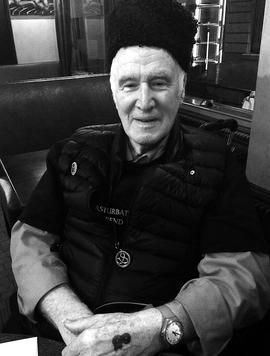
1975-2010
William Grant Munro (1975-2010) was a Toronto-based visual artist, community builder, event organizer and entrepreneur. Munro spent his childhood and teenage years in Mississauga. He graduated in 2000 from the Ontario College of Art and Design, where he studied sculpture and installation. In 1999, he founded Vazaleen, a now legendary series of dance parties. In 2006, he and Lynn MacNeil purchased the Beaver Café, a hub of artistic, musical and social activity at Queen Street West and Gladstone Avenue in Toronto’s Parkdale neighbourhood. Munro worked as a DJ for events in the visual art community. He served on the Board of Directors of Art Metropole and York University. His artwork has been exhibited in solo and group exhibitions at numerous venues including Art in General, New York; and the Art Gallery of Ontario, Mercer Union, Art Gallery of York University, and Paul Petro Contemporary Art, Toronto. His work is represented by Paul Petro Contemporary Art.
AGOAC00034
·
Person
·
1936 -
Iain Baxter, Canadian conceptual artist, was born in 1936 in Middlesbrough, England, and moved to Calgary, Alberta with his family one year later. While studying biology at the University of Idaho, Baxter met Elaine Hieber, whom he married in 1959. Following studies in the U.S. and Japan, the Baxters moved to Vancouver in 1964, when Iain accepted a teaching position at the University of British Columbia. In subsequent years, he also taught at Simon Fraser University and the Emily Carr College of Art. Early collaborative art ventures culminated in the development of the N.E. Thing Company in 1967. The company functioned as an “aesthetic umbrella,” allowing Iain and his wife to work collaboratively and anonymously to produce a wide range of art forms and projects. The N.E. Thing Co. was formally incorporated in 1969, with Iain Baxter as President and Elaine as Vice President; the two later became co-presidents. Elaine Baxter adopted Ingrid as her preferred name in 1971. Among the company’s projects was the Eye Scream Restaurant, in operation from 1977 to 1978. Following the Baxters’ divorce, the company dissolved in 1978. Iain Baxter returned to Calgary in 1981, where he taught at the Alberta College of Art. For a brief period (1983-84), he was employed as Creative Consultant to the Labatt Brewing Company. Since 1988, Baxter has lived in Windsor, Ontario, where he teaches at the University of Windsor. He married Louise Martin in 1984. Baxter’s work is particularly informed by the ideas of Marshall McLuhan and communications theory. He also cites the art of Giorgio Morandi, Zen Buddhism, and his early studies in biology and ecology as conceptual influences. Baxter has explored a broad range of media and genres, including vacuum-formed plastic, inflated vinyl, telex, polaroid prints, environmental art and multimedia installation. His work is included in the collections of numerous major Canadian and international galleries.