Showing 48 results

Authority record
Wilfrid Laurier University Archives

Booth, Gotthard, 1899-1975

  • AC00345
  • Person
  • 1899 - 1975

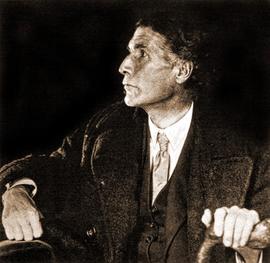
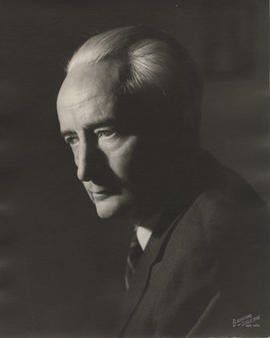
Gotthard Booth (1899-1975) was a medical doctor specializing in the practice of psychiatry concerned with chronic physical diseases, psychosomatic medicine, and studies in the relationship between religion and health. Born in Nuremberg, Germany, Booth graduated from the University of Munich Medical School in 1923, and in the early 1930s moved to the United States. He resided in Westport, Connecticut but maintained a practice in New York City. Booth taught at Columbia University from 1945 to 1953, was instructor for one year at the New York Medical College, and from 1962 was consulting psychiatrist for the Union Theological Seminary, New York. In 1965 he became a visiting lecturer at Waterloo Lutheran University (now Wilfrid Laurier University) and its federated college, Waterloo Lutheran Seminary. A fellow of the American Psychiatric Association, Booth's research resulted in the publication of more than 60 articles. He worked as a research associate with the New York Psychiatric Institute for ten years. He was also a member of the American Psychosomatic Society, the Academy of Psychosomatic Medicine, the New York County Medical Society, and the American Medical Association.

Houser, Ray, 1897-1981

  • AC00358
  • Person
  • 1897 - 1981

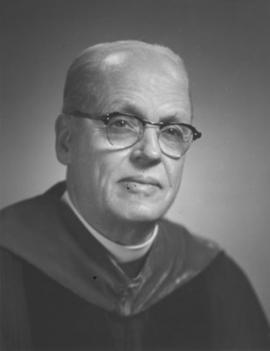
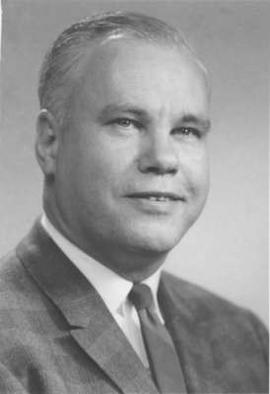
J. Ray Houser (1897-1981) was a Lutheran pastor, and President of Waterloo Lutheran Seminary in Waterloo, Ontario. Houser was educated at Gettysburg College and Mt. Airy Theological Seminary, Philadelphia. After his ordination in 1924 he served as a pastor in the United States. In 1954 he became President of Waterloo Lutheran Seminary, serving until his retirement in 1968.

Canadian Water Resources Association

  • S091
  • Corporate body
  • 1947 -

The Canadian Water Resources Association is a national organization of individuals and organizations interested in the management of Canada's water resources. It has branch organizations in most provinces and territories. CWRA history can be traced back to 1947 when the first meeting was held in Alberta as the Western Canada Reclamation Association. CWRA exists to stimulate public awareness and understanding of Canada's water resources, to encourage public recognition of the high priority of water as a valued resource, to provide a forum for the exchange of information and opinion relating to the management of Canada's water resources, and to participate with appropriate agencies in international water resource activities

Overgaard, Herman O. J.

  • S099
  • Person
  • 1920-2000

Herman Overgaard (1920-2000) was an author, administrator, and professor at Wilfrid Laurier University in Waterloo, Ontario. He obtained his BA from the University of Manitoba, and his MS and PhD from Columbia University. In 1947 Overgaard became an assistant professor in the Department of Economics and Business Administration at Waterloo College (now Wilfrid Laurier University). He held various positions at the university, including Department Chair; Director, School of Business and Economics; and Director of Summer School, Orillia Campus. After retiring in 1986 Overgaard continued to teach on a part-time basis until 1991. In 2000 Herman Overgaard received an Honorary Doctor of Laws degree from Wilfrid Laurier University.

Seminette Club

  • S047
  • Corporate body
  • 1954-1970

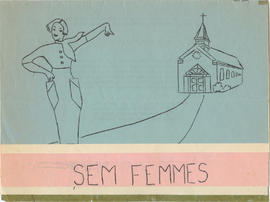
The Seminette Club (1954-1970) was for the wives, and intended wives, of students at the Evangelical Lutheran Seminary of Canada, and Waterloo College (now Wilfrid Laurier University) in Waterloo, Ontario. The purpose of the club was fellowship, study, and discussion in preparation for the role of a pastor's wife.

Powys, John Cowper, 1872-1963.

  • S078
  • Person
  • 1872-1963

John Cowper Powys (1872-1963) was an English author and lecturer. Born in Derbyshire, England, he was the eldest of eleven children of Rev. Francis and Mary Powys. John Cowper Powys was educated at Sherborne School and Corpus Christi, Cambridge. He first lectured at girls' schools in the Brighton area, and from 1898 to 1909 lectured for the Oxford University Extension Delegacy. In 1905 he made his first lecture tour in the United States, where he continued to tour until 1934. Powys' publications include novels, an autobiography, and a series of philosophical essays. In 1958 he received the plaque of the Hamburg Free Academy of Arts for outstanding services to literature and philosophy. In 1962 Powys received an honorary degree from the University of Wales.

Roy, Flora

  • CA-WLUA-0054
  • Person
  • April 24th, 1912 - March 12th, 2008

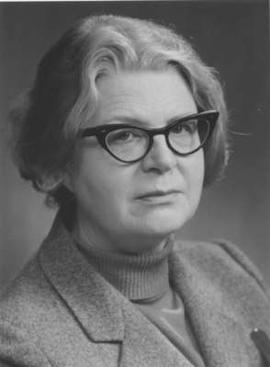
Flora Roy (1912-2008) was a professor at Wilfrid Laurier University in Waterloo, Ontario from 1948 until 1993. Roy received her BA and MA from the University of Saskatchewan and her PhD from the University of Toronto. In 1948 she became a professor in the English Department at Waterloo College (now Wilfrid Laurier University), and served as Department Chair for 30 years. Roy retired from full time teaching in 1978 but continued to teach on a part-time basis until 1993. She received the Confederation Medal in 1967, Queen Elizabeth II Jubilee Medal in 1978, Wilfrid Laurier University Language Arts Award in 1984, and the Wilfrid Laurier University Alumni Association Distinguished Educator award in 1995. In 1988 Flora Roy received an honorary degree from Wilfrid Laurier University.

Wilfrid Laurier University. Faculty of Social Work

  • U257
  • Corporate body
  • 1966-

The Waterloo Lutheran University Graduate School of Social Work was founded in 1966 with a curriculum based on clinical practice as well as community organization practice. Students specialized in one of five concentrations: community development, social planning, social administration, research, or individuals, families and social groups. The first class graduated in 1968, the same year that the Graduate School of Social Work was accredited by the Council on Social Work Education. In 1974, the name of the program was changed to the Faculty of Social Work to reflect the expansion into part-time, continuing education and undergraduate social welfare courses (offered in the Faculty of Arts and Science). In 1981, the Faculty of Social Work created an undergraduate Social Welfare Option, considered to be a minor.

The Doctor of Social Work program was established in 1987, making it the first doctoral program at Wilfrid Laurier University.

By 1988 the Faculty had moved from the seminary to the Peters building and then to the Aird building before moving to the St. Jerome’s Duke Street building in 2006. This Laurier Kitchener campus was a 12 million dollar conversion from historic landmark to professional school.

The first Dean of the Faculty of Social Work was Sheldon L. Rahn (1966-1968), followed by Francis J. Turner (1969-1979), Sherman Merle (1980-1983), Shankar A. Yelaja (1983-1993), Jonnah Hurn Mather (1994-2001), Luke J. Fusco (2001-2006), Leslie Cooper (2006-2009), and Nicholas Coady (2011-).

Wilfrid Laurier University. Faculty of Science

  • U258
  • Corporate body
  • 1991 -

The Faculty of Science at Wilfrid Laurier University was founded in 2000, when the Faculty of Arts and Sciences partitioned into distinct faculties of Arts and Science. The Faculty consists of the Departments of Biology, Chemistry, Kinesiology and Physical Education, Mathematics, Physics and Computer Science, Psychology and the Health Sciences program. Deans of the Faculty of Science have been Dr. Arthur Szabo (2000-2007), Dr. Deb MacLatchy (2007-2009), and Dr. Paul Jessop (2009- present).

The Faculty is predominantly housed in the Science Building which was officially opened in 1995. Eventually the Science Research Centre (opened in 2004) was added between the Science and Bricker Academic Buildings. The Research Centre is a dedicated research building for faculty and students.

In 2000, the Faculty of Science mandate was as follows:
“Laurier’s Faculty of Science is dedicated to collaboration between and beyond its six departments. In that spirit, the Faculty offers selected high quality programs with homes in Biology, Chemistry, Kinesiology & Physical Education, Mathematics, Physics and Computer Science and Psychology. Its programs are contemporary and competitive, designed to attract the highest quality students, and to provide them with a stimulating education and thorough preparation for employment or further studies. That Faculty holds the advance of scientific knowledge as one of its key values, and as such is committed to sustaining a supportive climate for research in the pure, social and applied sciences. The Faculty’s spirit of shared enterprise is highly valued by its members.”

Wilfrid Laurier University. Faculty of Music

  • R4
  • Corporate body
  • 1967 -

Established in 1975, the Faculty of Music delivers music education and related activities at Wilfrid Laurier University. As of 2013, undergraduate degree options include an Honours Bachelor of Music (BMus) degree and an Honours Bachelor of Music Therapy (BMT) degree. The faculty also offers Master of Music Therapy and Master of Arts in Community Music degrees. In addition to the degree programs, there are several supplementary and post-graduate options including three diploma programs, a practicum program and a management option. The Faculty of Music invites guest artists from around the world to contribute to the course offerings and hosts a number of affiliated artists, beginning in 1967 with Peter van Ginkel. Every year the faculty produces a number of concerts and recitals of traditional, new and original music. The concerts showcase the talents of WLU students and special guests in a variety of styles and forms including jazz, opera and orchestra.
The institution’s involvement with music dates back to first half of the 20th century when it was known as Waterloo College. Initially, musical activities at the college were the domain of student groups such as the college choir and the glee club. In the years following World War II the interest in music had grown at the college. There was an annual student musical known as the Purple and Gold review and the college choir led by Dr. Ulrich Leupold regularly toured the parishes of Southern Ontario. In 1945 Dr. Leupold established the Department of Music with the class Music10. By 1956 the college offered two courses in music history and theory, as well as one course on church music. In 1965 a music program was formally created by Dr. Walter Kemp. This new program allowed students to earn a Bachelor of Arts with a major in music. In 1969, a new three-year Bachelor of Music degree was introduced and was to commence in 1970.

The Music Department remained affiliated with the Faculty of Arts for the next five years. Traditionally, the department held classes in the chapel and in a music room in the Arts Building. However, these facilities did not suit department’s needs and in 1971 classes were moved into two houses on Bricker Street. Due to noise complaints from neighbouring residents, the music department was soon asked to vacate the houses. The department was then moved into the garage of the President’s House (Alumni Hall). On May 1st, 1975 the Department of Music became the Faculty of Music. Dr. Christine Mather was named the first Dean and was inducted on November 3, 1975. That same year, the Faculty of Music was moved to Macdonald House. In 1979, Dr. Gordon Greene became Dean and held the position for two consecutive terms. In 1988 the Faculty was moved to the newly constructed John Aird Centre, which contains the Maureen Forrester Recital Hall, the Theatre Auditorium, classrooms, practice rooms and offices. This purpose-built centre remains as the current home of the Faculty of Music. In 1989, Anne Hall was appointed Dean. Other Deans of the Faculty of Music include Dr. Charles Morrison (Appointed in 2000) and Dr. Glen Carruthers (Appointed in 2010).

Waterloo Lutheran University

  • AC0084
  • Corporate body
  • 1960-1973

In 1910 the Canada Synod and Synod of Central Canada of the Lutheran Church entered into an agreement to establish a Lutheran Seminary. Though the location first proposed for the Seminary was Toronto, Waterloo was selected when its citizens offered a tract of land on the boundary of the town. The choice of location was affected, too, by the fact that the majority of Lutherans in Ontario lived in the vicinity of Waterloo and Berlin (Kitchener). In 1911 the Evangelical Lutheran Seminary of Canada opened its doors.

Facilities for pre-theological education were established in 1914 with courses leading to senior matriculation given in Waterloo College School.

In 1924 the Waterloo College of Arts, providing courses in post-secondary education in a four year program, was established. In 1925 the Faculty of Arts, under the name of Waterloo College, affiliated with the University of Western Ontario. Waterloo College soon began to offer Honours degree programs in the arts.

The affiliation with the University of Western Ontario ended in 1960 when the Seminary obtained a revised charter changing the name of the institution to Waterloo Lutheran University.

On November 1, 1973, Waterloo Lutheran University became Wilfrid Laurier University, one of Ontario's provincially assisted universities after Bill 178 was given Royal Assent by the Lieutenant Governor, former Wilfrid Laurier University Chancellor William Ross Macdonald.

Waterloo Lutheran Seminary

  • 075
  • Corporate body
  • 1911-

Waterloo Lutheran Seminary (WLS) officially opened on October 30, 1911 in Waterloo, Ontario in a house located on five acres of land donated by the City of Waterloo. The first class consisted of four students and one full-time faculty member, Ottomar Lincke. Lincke would also serve as the first executive officer until 1914. In 1924, Waterloo College was established, providing courses in post-secondary education. The following year, the Seminary and Waterloo College affiliated with the University of Western Ontario (UWO) allowing students to earn an accredited degree. Women were allowed to attend to Waterloo College beginning in 1929.

In 1960 Waterloo College ended its affiliation with the University of Western Ontario and became an independent, degree granting institution called Waterloo Lutheran University that operated alongside the Seminary.

The current Seminary building was dedicated on October 20th, 1963. In 1973 Waterloo Lutheran University became a provincially-funded, secular institution and was renamed Wilfrid Laurier University. The Lutheran Church was no longer responsible for the operating the University but the Waterloo Lutheran Seminary remained a federated college of Wilfrid Laurier University.

In the 1980s, the Waterloo Lutheran Seminary gained full accreditation status in the Association of Theological Schools in the United States and Canada. In 1994, a Doctor of Ministry degree was added. The year 2010 saw the creation of the Kanata Centre for Worship and Global Song, which seeks to bridge the cultural gap between developed and less developed countries. Currently, the Seminary offers a variety of diploma, master’s and doctoral programs, as well as a Bachelor of Arts in Christian Studies and Global Citizenship.

Uniroyal Chemical

  • 056
  • Corporate body
  • 1986-1999

In 1986, Uniroyal Chemical Company was formed as a subsidiary of Avery Inc. Then, in 1989, Uniroyal Chemical Company Investors Holding bought Uniroyal Chemical Company from Avery and became Uniroyal Chemical Corporation. In 1996, Uniroyal Chemical Corporation went public and merged with Crompton & Knowles. In 1996, Uniroyal Chemical Corporation went public and merged with Crompton & Knowles. In 1999, Crompton & Knowles merged with Witco to form Crompton Corporation. In 2005, Crompton acquired Great Lakes Chemical Company, Inc., of West Lafayette, Indiana, to form Chemtura Corporation.

Chemtura Canada Co./Cie.

  • 035
  • Corporate body
  • 2006 - 2017

Chemtura Corporation was a global corporation headquartered in Philadelphia, Pennsylvania, with its other principal executive office in Middlebury, Connecticut. The company focused on specialty chemicals for various industrial sectors, and these were transportation (including automotive), energy, agriculture, and electronics. Chemtura operated manufacturing plants in 11 countries, including Canada.

Chemtura Corporation was the successor to Crompton & Knowles Corporation, which was incorporated in Massachusetts in 1900 and engaged in the manufacture and sale of specialty chemicals beginning in 1954. Crompton & Knowles traces its roots to Crompton Loom Works incorporated in the 1840s. In 2005, Crompton acquired Great Lakes Chemical Company, Inc., of West Lafayette, Indiana, to form Chemtura Corporation. Additionally, Great Lakes Chemical Corporation still existed as a subsidiary company of Chemtura. On April 21, 2017, Chemtura was officially acquired by Lanxess for $2.1 billion in cash.

In Canada, Chemtura and its predecessor corporations operated a plant in Elmira, Ontario. Since 1941 the plant has undergone various name and ownership changes. From 1966-2000 the plant operated as Uniroyal Chemical, from 2000-2006 as Crompton Company, and on July 1, 2006 formally changed its name to Chemtura Canada Company.

Stowe, Emily Howard, 1831-1903.

  • S006
  • Person
  • 1831-1903

Emily Howard Jennings Stowe (1831-1903) was a teacher and principal, a medical doctor, and a suffragette. Educated at home, Stowe became a teacher in 1846 and graduated from the Provincial Normal School in Toronto, Canada West in 1854. In 1865 Stowe applied to study medicine at the University of Toronto, but was denied entry because she was a woman. Unable to pursue her education in Canada, she attended the New York Medical College for Women. After graduating in 1867, Stowe returned to Toronto to practice medicine without a license. In 1870 she was allowed to attend the University of Toronto and was granted a medical license in 1880. In 1877 Emily Stowe organized Canada's first suffrage organization, initially called the Toronto Women's Literary Club, which later became the Toronto Women's Suffrage Club.

Stowe-Gullen, Augusta, 1857-1943

  • S007
  • Person
  • 1857-1943

Ann Augusta Stowe-Gullen (1857-1943) was a medical doctor, a lecturer and a suffragette. She was born in Mt. Pleasant, Ontario, the daughter of John Stowe and Emily Howard Jennings. She married John Benjamin Gullen in 1883. She died in Toronto. Stowe-Gullen was educated at the Toronto School of Medicine, then at the Faculty of Medicine at Victoria University, Toronto, where she became an M.D. in 1883, the first woman to graduate from a Canadian medical school. Immediately after graduating she was appointed Demonstrator in Anatomy at the Woman’s Medical College in Toronto (from 1894 onwards known as the Ontario Medical College for Women). In 1890 she was appointed Lecturer on Diseases of Children, subsequently Professor of Diseases of Children. She also served among the original staff members of Toronto Western Hospital (founded in 1896). Stowe-Gullen was a member of the Ontario College of Physicians and Surgeons, the Ontario Social Service Council, the Senate of the University of Toronto where she represented women in the medical profession (1912-24), the Toronto Board of Education (1892-96), the University Women's Club, the Women's Art Association, the Women's Board at Toronto Western Hospital, and the Women's Canadian Club. She was also active in the suffrage, temperance and other social movements. She was among the founders of the National Council of Women in 1893, (President) of the Canadian Suffrage Association, (Vice-President) of the National Council of Women, and she succeeded her mother as President of the Dominion Women’s Enfranchisement Association in 1903. In 1935 she was awarded the Order of the British Empire.

Stapleton, James

  • S002
  • Person
  • 1941-2012

Jim Stapleton was a student at Waterloo Lutheran University (now Wilfrid Laurier University) from 1961 to 1965.

Spady, Nathanael, 1879-1947

  • S049
  • Person
  • 1879-1947

John Frederick Nathanael Spady (1879-1947) was a musician and composer in Waterloo, Ontario. Taught by his mother, who was the organist at St. John’s Lutheran Church in Waterloo for more than 30 years, Spady excelled as a pianist and violinist. He authored more than 600 pieces of music.

Russell, Harold

  • S090
  • Person
  • 193?-

Harold Russell was a student at Waterloo College from 1954 to 1958. He was a member of the Waterloo College Detachment of the University of Western Ontario Contingent of the Canadian Officers' Training Corps.

Regier, Henry A., 1930-

  • S044
  • Person
  • 1930 -

Henry A. Regier (1930 - ) was a professor of zoology and environmental studies at the University of Toronto until his retirement in 1995. Regier received his BA from Queen's University, a professional teaching certificate from the University of Toronto, and his PhD from Cornell University. In 1966 he joined the University of Toronto. Henry Regier's research interests include the Great Lakes, human use of aquatic systems, world population, and climate change. Regier served as a Canadian commissioner on the Great Lakes Fishery Commission, from 1980 to 1989. From 1987 to 1990 he served on the Great Lakes Science Advisory Board of the International Joint Commission of Canada and the USA. Regier has received many awards, including the Conservation Award of the Federation of Ontario Naturalists in 1980, the Centenary Medal by the Royal Society of Canada in 1986, the Award of Excellence of the American Fisheries Society in 1992, and the Lifetime Achievement Award from the International Association of Great Lakes Research in 2005.

Personal Studio (Waterloo, Ont.)

  • S086
  • Corporate body
  • 1946 - 1996

Personal Studio was founded by Robert T.G. Nicol and a friend, and officially opened for business on March 21, 1946. Nicol was the sole photographer and owner by the fall of 1946. For the next fifty years Robert Nicol documented the Waterloo Region through personal and commercial photography. He pioneered the concept of wedding albums in the local area. He had started flying in 1961 and from that time on took aerial photographs as well as studio and candid photography. In the course of his career he maintained memberships in professional photographers' organizations as well as completing continuing photographic educational courses offered by those organizations. He retired as a professional photographer in 1996.

APT Environment

  • S096
  • Corporate body

APT Environment is an environmental organization in Elmira, Ontario, that is interested in the Chemtura Canada Company, formerly Uniroyal Chemical and Crompton Company. Since 1941 the plant has undergone various name and ownership changes. From 1966-2000 the plant operated as Uniroyal Chemical, from 2000-2006 as Crompton Company, and on July 1, 2006 formally changed its name to Chemtura Canada Company.

Beaver Valley Heritage Society

  • S098
  • Corporate body
  • 197? -

The Beaver Valley Heritage Society began in the mid 1970s as a group of concerned citizens, and was incorporated in 1981 as a non-profit citizen's organization created to preserve and protect the natural environment of the Beaver Valley in Ontario. The Beaver Valley's territory runs through the four townships of Artemesia, Collingwood, Euphrasia and St. Vincent. It stretches over 25 miles, from Flesherton to Georgian Bay at Thornbury. The Beaver Valley Heritage Society endeavors to represent the interests of the Valley's residents and anyone who wishes to support the Society's objectives of opposing inappropriate development in the Valley. The Society supports development, provided it occurs in approved areas, and does not impact on wildlife, fishing, and the natural environment. The role of the Society is to present the views of its members in a coherent, concise and organized way to the decision-making bodies that have jurisdiction over the Beaver Valley.

Birtch, Jim.

  • S097
  • Person

Jim Birtch (19-- - ) is the Executive Secretary of the Canadian Biosphere Reserves Association, a non-profit association incorporated in 1997, to provide support and networking relationships that help develop and maintain biosphere reserves throughout Canada.

Nelson, James Gordon, 1932-

  • 0027
  • Person
  • 1932 -

James Gordon Nelson, (1932- ) was a professor at the University of Waterloo, in Waterloo, Ontario until his retirement in 1998. Nelson received his BA from McMaster University, his MA from Colorado, and his PhD from Johns Hopkins University. Before accepting a position with the University of Waterloo in 1975, Nelson held academic and administrative positions at the University of Calgary and the University of Western Ontario. He is an ecologist, a geographer, a planner, and a policy maker. James Gordon Nelson has been a member of the College of Fellows of the Royal Canadian Geographic Society, a committee member of the World Commission on Protected Areas of the International Union for Conservation of Nature and Natural Resources, a member of the National Executive Committee of the Canadian Parks and Wilderness, and Ontario's Representative on the National Board of Governors of Heritage Canada. He has received many awards, including the first Natural Heritage Award in 1978, the Canadian Association of Geographers Award for Scholarly Distinction in Geography in 1983, the Massey Medal for the Royal Canadian Geographic Society in 1983, a Certificate of Achievement from the Grand River Conservation Authority in 1994, and the 1994 Environment Award for the Regional Municipality of Waterloo.

Misener, Harley Anson

  • 044
  • Person
  • 1897-1972

Harley Anson Misener (1897-1972) was a genealogist in Ontario, researching the Misener family. Harley Misener was the seventh generation of Miseners whose first ancestors, Richard Misener and his wife Elizabeth, emigrated with their family from the Palatinate district of Germany to North America in 1720 and settled in New Jersey.

McClenaghan, Theresa, 1962-

  • 00357
  • Person
  • 1962 -

Theresa McClenaghan (1962-) is a Canadian lawyer. She has pursued public interest environmental law throughout her career, representing individuals, groups, and First Nations in environmental matters of local, regional, and national significance. McClenaghan obtained her LLB from the University of Western Ontario, an LLM from Osgood Hall Law School, York University, and a diploma in Environmental Health from McMaster University. She has been called to the bar of Manitoba and Ontario, and has practiced law in Kitchener, Paris, and Toronto, Ontario.

Leupold, Ulrich, 1909-1970.

  • 0037
  • Person
  • 1909 - 1970

Ulrich S. Leupold (1909-1970) was a professor and Dean at Waterloo Lutheran Seminary in Waterloo, Ontario. He obtained his PhD in musicology from the University of Berlin in 1932. He was ordained by the Canada Synod in 1939 and served as a pastor until 1945. He was appointed Principal in 1969. He authored, arranged, and composed numerous works. Wilfrid Laurier University's Leupold Residence is named in his honour.

Laurier, Wilfrid, Sir, 1841-1919

  • AC0001
  • Person
  • 1841 - 1919

Wilfrid Laurier (1841-1919) was Canada's eighth Prime Minister, holding office 1896-1911. Laurier was born in St. Lin, Quebec. He received a law degree from McGill University in 1864, and practiced law in Montreal and Arthabaskville from 1864-1896. Wilfrid Laurier was Liberal party leader from 1887 until his death in 1919.

Great Lakes Fishery Commission.

  • 092
  • Corporate body
  • 1955 -

The Great Lakes Fishery Commission was established in 1955 by the Canadian/U.S. Convention on Great Lakes Fisheries. The commission coordinates fisheries research, controls the sea lamprey, and facilitates cooperative fishery management among the state, provincial, tribal, and federal management agencies.

Ontario Toxic Waste Research Coalition.

  • AC00328
  • Corporate body

OTWRC is a group of citizens' and agricultural groups who succeeded in cancelling the Ontario Waste Management Corporation's plans to build a hazardous waste plant in West Lincoln in the Niagara Peninsula. The group now comments on hazardous waste issues in Ontario and pushes for waste elimination.

Jackson, John, 1947-

  • AC04590
  • Person
  • 1947 -

John Jackson (1947 - ) is an environmental activist in Ontario, Canada. Jackson received his BA from the University of Waterloo in 1969. He is a researcher, project director, advisor, chair and coordinator of numerous environmental agencies. Jackson served as President of the Ontario Toxic Waste Research Coalition, a citizens' and agricultural group which succeeded in halting the Ontario Waste Management Corporation's plans to build a hazardous waste plant in West Lincoln in the Niagara Peninsula. In recognition of his leadership, John Jackson was presented a scroll by the Member of Provincial Parliament for the Riding of Lincoln.

King, William Lyon Mackenzie, 1874-1950

  • AC00328
  • Person
  • 1874 - 1950

William Lyon Mackenzie King (1874-1950) was Canada’s Prime Minister for 22 years, holding office 1921-1926, 1926-1930, and 1935-1948. King was born in Berlin (later renamed Kitchener), Ontario. King received his BA, LLB, and MA at the University of Toronto. At Harvard University he received an MA and a PhD. King was leader of the Liberal Party from 1919-1948.

Hewitt, Kenneth, 1937-

  • AC00332
  • Person
  • 1937 -

Kenneth Hewitt (1937- ) was a professor of geography and environmental studies at Wilfrid Laurier University in Waterloo, Ontario, from 1976 until his retirement in 2002. Hewitt earned his BA and MA at Cambridge University, and his PhD at London University. He is a founding member of the Cold Regions Research Centre. Hewitt has been the recipient of many research awards. Hewitt was proclaimed Wilfrid Laurier University Research Professor for 1988-1989, and received the Award for Scholarly Distinction in Geography from the Canadian Association of Geographers in 1991.

Heldmann, Jim

  • AC00325
  • Person
  • 19- -

Jim Heldmann is an alumnus of Wilfrid Laurier University having graduated with a BA in 1958 and an MA in 1990. As an undergraduate, Heldmann was a member of the editorial staff of the Cord as well as News Weekly where wrote the humor advice column “Miss Winks”. He was also a member of the Keystone editorial staff and the curling team.

Gertler, Leonard O., 1923-2005

  • AC00045
  • Person
  • 1923 - 2005

Len Gertler (1923-2005) was a planner, administrator, author, and university professor, whose areas of study included planning, and public policy. Gertler was born in Montreal, Quebec, and was educated at Queen's University, McGill University, and the University of Toronto. Throughout his career he held a wide variety of positions. Len Gertler served as Director of the Edmonton District Planning Commission, and also held the position of Deputy Commissioner of Planning for the City of Toronto. In 1966 he became a professor at the University of Waterloo, establishing a new program in Urban and Regional Planning. He was also involved in establishing the University of Waterloo's Faculty of Environmental Studies, and became the first Director of the School of Planning. Gertler was the coordinator and author of the Niagara Escarpment Study in 1968. His international work included assignments in Indonesia, Jamaica, India, Japan, and Uzbekistan. Gertler was a member and Vice-Chair of the Ontario Environmental Assessment Board, from 1990-2001. The Canadian Institute of Planners' Award for Planning Excellence in 2001 was named in honour of Len Gertler.

Willison, Nils, 1880-1964.

  • AC0234
  • Person
  • 1880 - 1964

Nils Willison (1880-1964) was a Lutheran pastor, professor and administrator. Willison graduated from the University of Toronto in 1908, received a BA from Queens University, and was the first graduate of Evangelical Lutheran Seminary (now Waterloo Lutheran Seminary) in 1914. He was a professor at Waterloo College from 1918-1928, and also served as Registrar. From 1928-1936 Nils Willison was pastor of Trinity Lutheran Church, Hamilton. He was President and Dean of the Lutheran College and Seminary in Saskatoon, Saskatchewan, from 1936-1949. Willison returned to Ontario in 1949 and served as pastor of the Owen Sound-Wiarton parish until 1952. He was a member of the Board of Governors of Waterloo College and Seminary for 12 years. The University of Western Ontario granted Nils Willison an honorary Doctor of Divinity degree in 1944. Wilfrid Laurier University’s Willison Hall is named in his honour.

Evangelical Lutheran Seminary of Canada

  • AC00323
  • Corporate body
  • 1911-1960

The Evangelical Lutheran Seminary of Canada began in 1911. In 1924 Waterloo College was established, providing courses in post-secondary education. In 1960 Waterloo Lutheran University was formed, consisting of Waterloo University College and Waterloo Lutheran Seminary. In 1973 the name of the University was changed to Wilfrid Laurier University, with Waterloo Lutheran Seminary as a federated college.

Langen, Robert

  • S087
  • Person

Robert Langen (19-- -) was a professor at Wilfrid Laurier University in Waterloo, Ontario, until his retirement in 1984. Langen received his BA from Waterloo College in 1948, and his MA from the University of Toronto in 1956. In 1954 he became a lecturer at Waterloo College (now Wilfrid Laurier University) and eventually became the first chairman of the Philosophy Department. Robert Langen was involved in many committees and organizations, including the Cultural Affairs Committee, and a local chapter of the World University Service of Canada. In 1989 Wilfrid Laurier University named its art gallery in his honour.

Theberge, John B., 1940-

  • S099
  • Person
  • 1940 -

John Theberge (1940- ) was a professor and researcher in the Faculty of Environmental Studies, University of Waterloo, from 1972 until his retirement in 2000. Theberge received his BSc from the University of Guelph, MSc from the University of Toronto, and PhD from the University of British Columbia. John Theberge's career focused on his wolf research, pioneering a technique using vocal patterns to identify wolves. John Theberge and his co-researcher and wife Mary Theberge became Canada's premier timber wolf research team, receiving international recognition for their field research. In 1993, Equinox magazine proclaimed John and Mary Theberge "Environmentalist of the Year". In 1998 they were presented with the Harkin Medal from Canadian Parks and Wilderness Services.

Kash, Eugene

  • S709
  • Person
  • 1912-2004

Eugene Kash (1912-2004) was a Canadian violinist, conductor and teacher. He was married to contralto Maureen Forrester from 1957 to 1974.

Forrester, Maureen

  • S708
  • Person
  • 1930 - 2010

Maureen Forrester (1930-2010), born in Montreal, Quebec, was one of the world's leading contraltos. After making her professional debut in 1951, she toured the world performing with virtually every major choir until the 1990s. In 1965 she began giving master classes. She was chairman of the voice department at the Philadelphia Music Academy from 1966 to 1971 and later taught part-time at the University of Toronto and the University of Alberta. Forrester was chair of the Canada Council 1983 to 1988, chancellor of Wilfrid Laurier University 1986-1990, and in 1986 she was honorary president of the International Year of Canadian Music. Maureen Forrester received many awards and recognitions including 30 honorary degrees. She was named a Companion of the Order of Canada in 1967, awarded a Canadian Music Council medal in 1983, received the Order of Ontario in 1990, and inducted into the Juno Hall of Fame. Wilfrid Laurier University named its recital hall in her honour and established a scholarship in her name.

Waterloo College

  • AC00067
  • Corporate body
  • 1924-1960

In 1910 the Canada Synod and Synod of Central Canada of the Lutheran Church entered into an agreement to establish a Lutheran Seminary. Though the location first proposed for the Seminary was Toronto, Waterloo was selected when its citizens offered a tract of land on the boundary of the town. The choice of location was affected, too, by the fact that the majority of Lutherans in Ontario lived in the vicinity of Waterloo and Berlin (Kitchener). In 1911 the Evangelical Lutheran Seminary of Canada opened its doors.

Facilities for pre-theological education were established in 1914 with courses leading to senior matriculation given in Waterloo College School.

In 1924 the Waterloo College of Arts, providing courses in post-secondary education in a four year program, was established. In 1925 the Faculty of Arts, under the name of Waterloo College, affiliated with the University of Western Ontario. Waterloo College soon began to offer Honours degree programs in the arts.

The affiliation with the University of Western Ontario ended in 1960 when the Seminary obtained a revised charter changing the name of the institution to Waterloo Lutheran University.

On November 1, 1973, Waterloo Lutheran University became Wilfrid Laurier University, one of Ontario's provincially assisted universities after Bill 178 was given Royal Assent by the Lieutenant Governor (and former Waterloo Lutheran University Chancellor) William Ross Macdonald.

In September 1999, Laurier opened a campus in Brantford, Ontario.

Bernhardt, Clara, 1911-1993

  • AC0003
  • Person
  • 1911 - 1993

Clara Bernhardt (1911-1993) was a poet, novelist, composer, and columnist, who lived in Cambridge, Ontario. At the age of eleven she was stricken with polio and confined to a wheelchair. Although she was unable to pursue more that a Grade 8 education, Bernhardt wrote poetry, articles, and stories. Her newspaper columns circulated in Canada and the United States for more than sixty years, and she was a columnist for the Preston Times Herald (now the Cambridge Times) for thirty years. She published three volumes of poetry, two novels, and a book of songs. In 1991 Clara Bernhardt was presented with the Order of Ontario.

Potter, Alexander Oberlander

  • AC0009
  • Person
  • 1897-1969

Alexander Oberlander Potter (1897-1969) was a professor at Waterloo College (now Wilfrid Laurier University) in Waterloo, Ontario. Potter received his BA and MA from Gettysburg College, Pennsylvania, and his PhD from Columbia University. From 1923-1924 Alex Potter was an instructor at Waterloo College School. In 1924 he became the first Dean and Executive Head of the Waterloo College. A long time member of Rotary International, he served as Assistant to the President of Rotary International, Paris, France from 1937-1938. For several years he attended sessions of the League of Nations as a special observer and in 1931 represented Rotary International at the public conference on disarmament in Paris, France. In recognition of his services he was awarded the Order of St. Sava by the Yugoslavian government in 1936. During World War II, Potter worked for the Department of National War Services. After the war he returned to Waterloo College as a history professor, retiring in 1954. In 1965 Alex Potter received an honorary degree from Waterloo Lutheran University.

Wilfrid Laurier University Women's Association

  • WLUWA-01
  • Corporate body
  • 1960 - 1993

Wilfrid Laurier University Women's Association (1960-1993) was a social group for female faculty and administrators as well as the wives of faculty members of Waterloo Lutheran University (now Wilfrid Laurier University) in Waterloo, Ontario. Its purpose was to welcome new members, develop social events and foster member participation in University and community affairs. The group was established under the name of Faculty Wives, which was changed to Waterloo Lutheran University Women's Association, and later to the Wilfrid Laurier University Women's Association.

Wilfrid Laurier University

  • 0001
  • Corporate body
  • 1973-

In 1910 the Canada Synod and Synod of Central Canada of the Lutheran Church entered into an agreement to establish a Lutheran Seminary. Though the location first proposed for the Seminary was Toronto, Waterloo was selected when its citizens offered a tract of land on the boundary of the town. The choice of location was further influenced by the fact that the majority of Lutherans in Ontario lived in the vicinity of Waterloo and Berlin (Kitchener). In 1911 the Evangelical Lutheran Seminary of Canada opened its doors.

Facilities for pre-theological education were established in 1914 with courses leading to senior matriculation given in Waterloo College School.

In 1924 the Waterloo College of Arts, providing courses in post-secondary education in a four year program, was established. In 1925 the Faculty of Arts, under the name of Waterloo College, affiliated with the University of Western Ontario. Waterloo College soon began to offer honours degree programs in the arts.

The affiliation with the University of Western Ontario ended in 1960 when the Seminary obtained a revised charter changing the name of the institution to Waterloo Lutheran University.

On November 1, 1973, Waterloo Lutheran University became Wilfrid Laurier University, one of Ontario's provincially assisted universities after Bill 178 was given Royal Assent by the Lieutenant Governor (and former Waterloo Lutheran University Chancellor) William Ross Macdonald.

In September 1999, Laurier opened a campus in Brantford, Ontario.